Did you know that a golf range finder can shave off an average of 30 minutes from your round? These handy devices have revolutionized the way golfers approach the game, providing accurate distances to the flag, hazards, and other key points on the course. Whether you're a seasoned pro or a weekend warrior, a range finder can help you make better decisions, avoid trouble spots, and ultimately shoot lower scores. In this ultimate guide, we'll dive deep into the world of golf range finders, exploring their benefits, features, and how to choose the best one for your needs. Get ready to take your game to the next level with the power of precision distance measurement!
What is a Golf Range Finder and How Does It Work?
Have you ever wondered what a golf range finder is? A golf range finder is a small device that helps golfers measure distances on the golf course. It can tell you how far away things are, like the hole or hazards.
Golf range finders work by using lasers or GPS technology. Laser range finders bounce a laser off the target and measure how long it takes for the laser to come back. GPS range finders use satellites to find your location and calculate distances.
Using a golf range finder is easy. You just point it at what you want to measure and press a button. The range finder will then show you the distance on a screen.
There are two main types of golf range finders:
- Laser range finders
- GPS range finders
Laser range finders are very accurate but can only measure one thing at a time. GPS range finders can show you distances to multiple points on the course but may not be as precise.
Golf range finders can be very helpful for golfers of all skill levels. They can help you:
- Choose the right club for each shot
- Avoid hazards like bunkers and water
- Plan your strategy for each hole
In conclusion, a golf range finder is a useful tool that measures distances using lasers or GPS. It's easy to use and can help golfers make better decisions on the course.
What Are the Benefits of Using a Golf Range Finder?
Do you want to improve your golf game? Using a golf range finder can help you in many ways. Here are some of the benefits:
-
Accuracy: Golf range finders give you accurate distances to the hole, hazards, and other points on the course. This helps you choose the right club and make better shots.
-
Confidence: When you know the exact distance, you can swing with more confidence. You don't have to guess or rely on markers that might be wrong.
-
Speed: Using a range finder is faster than walking off distances or asking your caddie. You can get the information you need quickly and keep the game moving.
-
Strategy: Range finders help you plan your shots and manage the course better. You can aim for specific targets and avoid trouble spots.
-
Improvement: By using a range finder regularly, you can learn more about your distances and club selection. This can help you make better decisions and lower your scores over time.
Some golfers worry that using a range finder is like cheating. But most courses and tournaments allow them as long as they conform to the rules. In fact, many pros use range finders during practice rounds to gather information about the course.
So if you're serious about improving your golf game, consider investing in a good range finder. It could make a big difference in your accuracy, confidence, and enjoyment of the game.
What Types of Golf Range Finders Are Available?
When it comes to golf range finders, you have a few different options to choose from. The two main types are laser range finders and GPS range finders. Here's a closer look at each one:
Laser Range Finders
Laser range finders work by bouncing a laser beam off your target and measuring how long it takes to come back. They are very accurate and can give you precise distances to the flag, hazards, or any other point on the course.
Some benefits of laser range finders include:
- High accuracy (within 1 yard)
- Ability to measure to any point on the course
- Compact and easy to carry
- No annual fees or subscriptions required
However, there are also some drawbacks:
- Can only measure one point at a time
- Requires a steady hand and clear line of sight
- May not work well in fog, rain, or low light
- More expensive than GPS range finders
GPS Range Finders
GPS range finders use satellite technology to determine your location on the course and provide distances to various points. They come preloaded with maps of thousands of courses worldwide.
Some benefits of GPS range finders include:
- Provides distances to multiple points simultaneously
- Works in any weather conditions
- Some models offer additional features like scorekeeping and shot tracking
- Generally less expensive than laser range finders
However, there are also some drawbacks:
- Accuracy can vary depending on satellite signal strength
- May not provide distances to specific targets like the flag
- Requires charging and annual fees or subscriptions for course updates
- Can be bulky or require wearing a watch or using a phone app
Which Type is Right for You?
The best type of golf range finder for you depends on your needs and preferences. If you want the highest accuracy and ability to measure any point, a laser range finder may be the way to go. If you prefer convenience and don't mind sacrificing some precision, a GPS range finder could be a good choice.
Here's a quick comparison table:
| Feature | Laser Range Finder | GPS Range Finder |
|---|---|---|
| Accuracy | High (within 1 yard) | Moderate (within 3-5 yards) |
| Measuring Targets | Any point on course | Pre-set points only |
| Ease of Use | Requires steady hand | Point and shoot |
| Weather Resistance | May not work well in rain/fog | Works in any weather |
| Cost | More expensive | Less expensive |
| Ongoing Fees | None | Annual subscriptions |
Ultimately, the choice between a laser and GPS range finder comes down to your personal preferences and budget. Both types can help you improve your golf game by providing accurate distances and assisting with club selection. Consider trying out both kinds before making a decision, and don't be afraid to ask for advice from other golfers or golf shop professionals.
How Accurate Are Golf Range Finders?
When it comes to golf range finders, one of the most important questions is: how accurate are they? After all, what's the point of using a device to measure distances if it's not reliable?
The good news is that most modern golf range finders are very accurate. Laser range finders, in particular, can provide distances within 1 yard of the target. This level of precision is more than enough for most golfers to make informed club selections and hit more accurate shots.
GPS range finders are generally slightly less accurate than laser models, with a typical margin of error of around 3-5 yards. However, this is still a significant improvement over relying on course markers or eyeballing distances.
It's important to note that the accuracy of any range finder can be affected by factors like:
- The quality of the device
- User error (e.g. shaky hands)
- Environmental conditions (e.g. fog, rain)
- The reflectivity of the target
To ensure the best possible accuracy, it's a good idea to invest in a high-quality range finder from a reputable brand. Take the time to learn how to use the device properly, and be aware of any limitations it may have in certain conditions.
In conclusion, golf range finders are generally very accurate, with laser models providing the highest level of precision. While no device is perfect, a good range finder can greatly improve your distance measuring and help you make better shots on the course. Just remember to practice with it and understand its strengths and weaknesses for the best results.
What Features Should I Look for When Buying a Golf Range Finder?
If you're in the market for a golf range finder, it's important to know what features to look for. With so many options available, it can be tough to know where to start. Here are some key things to consider:
-
Accuracy: As we discussed earlier, accuracy is crucial for a range finder. Look for models that offer high precision, ideally within 1 yard for laser range finders and 3-5 yards for GPS devices.
-
Range: Consider how far you typically hit your shots and choose a range finder that can comfortably measure those distances. Most laser range finders can measure up to 400+ yards, while GPS models may have a shorter range.
-
Ease of Use: You don't want to spend too much time fiddling with your range finder on the course. Look for models with intuitive interfaces, clear displays, and simple one-button operation.
-
Size and Weight: If you'll be carrying the range finder in your pocket or golf bag, size and weight are important factors. Look for compact, lightweight models that are easy to handle and transport.
-
Durability: Golf range finders can take a beating on the course, so durability is key. Look for models with sturdy construction, water resistance, and shock-proof housings.
-
Battery Life: Consider how long the battery lasts on a single charge or set of batteries. You don't want your range finder dying in the middle of a round. Look for models with long battery life or easy charging options.
-
Extra Features: Some range finders offer additional features like slope compensation, pin seeking, and vibration feedback. Decide which extras are important to you and look for models that include them.
-
Price: Golf range finders can vary widely in price, from under $100 to over $500. Set a budget and look for the best model that fits your needs and price range. Remember, a high price doesn't always mean better quality.
By considering these key features, you can narrow down your options and find the best golf range finder for your needs. Don't be afraid to read reviews, compare specs, and even try out a few models in person before making a decision. With the right range finder in hand, you'll be well on your way to better distance measuring and lower scores on the course.
Are Golf Range Finders Legal to Use in Tournaments?
One common question among golfers is whether range finders are legal to use in tournaments. The answer is: it depends on the specific tournament and local rules.
In general, the United States Golf Association (USGA) and the R&A (which governs golf worldwide) allow the use of distance-measuring devices like range finders during casual play. However, individual tournaments and courses may choose to prohibit them.
For most amateur tournaments, range finders are permitted as long as they only measure distance and not other factors like slope or wind. The USGA's Rule 4.3a(1) states that players may use devices that measure distance only, as long as the device does not:
- Measure other conditions that might affect play (e.g. wind speed or gradient)
- Provide recommendations that might assist the player in making a stroke or in his play (e.g. club selection)
In professional tournaments, the use of range finders is more restricted. The PGA Tour currently does not allow range finders during competition rounds, although they are permitted during practice rounds. The PGA of America (which runs the PGA Championship and other major events) recently announced that it will allow range finders as of 2021.
If you're playing in a tournament, it's always a good idea to check the specific rules beforehand. Most tournaments will clearly state in the local rules whether range finders are allowed and any restrictions on their use. When in doubt, ask a tournament official for clarification.
Even when range finders are permitted, there are some important things to keep in mind:
- Sharing range finder information with other players is generally allowed
3
- Using a range finder should not unduly delay play - be efficient!
- Make sure your range finder conforms to the specific rules of the competition
In summary, golf range finders are legal to use in most amateur tournaments as long as they only measure distance. Professional tournaments have stricter rules, but some are starting to allow them as well. Always check the specific competition rules and use range finders in a way that doesn't slow down play or break any regulations. With the right approach, a range finder can be a valuable tool for tournament golfers looking to improve their distance measuring and shot-making.
How Do I Use a Golf Range Finder Effectively?
Now that you have a golf range finder, it's important to know how to use it effectively on the course. Here are some tips to help you get the most out of your device:
-
Read the Manual: Before using your range finder, take the time to read the manual and familiarize yourself with all the features and functions. Learn how to turn it on/off, change settings, and interpret the display.
-
Aim Carefully: When using a laser range finder, make sure to aim the reticle (crosshairs) directly at your target. This could be the flag, a hazard, or a specific point on the fairway. Keep your hands steady and use both hands if necessary to reduce shake.
-
Scan the Area: If you're having trouble locking onto a target, try scanning the area back and forth until you get a reading. Some range finders have a scanning mode that continuously updates the distance as you move the device.
-
Use the Pin Seeking Feature: Many laser range finders have a pin seeking feature that helps you lock onto the flag more easily. When activated, the range finder will ignore background objects and prioritize the flag. Look for a flag icon or "P" on your display to confirm you've locked on.
-
Account for Elevation: If your range finder has a slope function, it can adjust distances to account for uphill or downhill shots. Make sure this feature is turned off for tournament play, but feel free to use it during practice rounds to get a better sense of true distances
-
Verify Your Distances: Occasionally double-check your range finder distances against known markers on the course. Most courses have yardage markers at 100, 150, and 200 yards. Comparing your range finder to these can help ensure its accuracy.
-
Use It Efficiently: While a range finder can be a great tool, it shouldn't slow down your pace of play. Get your distances while others are hitting, and be ready to hit when it's your turn. With practice, using a range finder will become second nature and won't add any time to your pre-shot routine.
-
Combine with Other Tools: A range finder is just one tool in a golfer's arsenal. Use it in combination with GPS, course knowledge, and your own judgment to select the best club and shot for each situation
What Are the Best Golf Range Finders on the Market?
Are you looking for the best golf range finders to improve your game? With so many options available, it can be tough to know where to start. Here are some of the top picks for 2024:
-
Bushnell Pro X3 Rangefinder: This high-end model from Bushnell is packed with features like slope compensation, Jolt vibration feedback, and 6x magnification. It's one of the most accurate and reliable range finders on the market.
-
Precision Pro NX10 Rangefinder: The NX10 offers great value for the price, with features like pulse vibration, 6x magnification, and a compact design. It's a solid choice for golfers looking for a reliable range finder without breaking the bank.
-
Garmin Approach Z82 Rangefinder: This premium model from Garmin includes high-tech features like GPS course mapping, wind speed and direction, and a full-color display. It's pricey but offers unmatched functionality for serious golfers.
-
Voice Caddie SL2: The SL2 stands out for its innovative features like audio distance readings and green undulation mapping. It's a great choice for golfers who want cutting-edge technology in their range finder.
-
TecTecTec VPro 500: If you're on a tight budget, the VPro 500 is a great entry-level option. It offers basic distance measuring up to 540 yards and a durable, water-resistant design. It may lack advanced features, but it gets the job done at an affordable price.
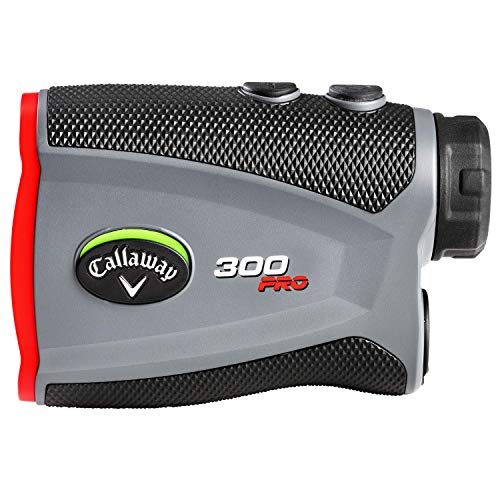
Other top contenders include the Callaway 300 Pro Slope, Nikon Coolshot Pro II Stabilized, and Leupold GX-5i3. Ultimately, the best range finder for you will depend on your specific needs and budget.
When shopping for a golf range finder, consider factors like:
- Accuracy and range
- Magnification and display quality
- Slope compensation (if allowed)
- Extra features like GPS or wind measurement
- Brand reputation and warranty
By doing your research and choosing a range finder that fits your game, you'll be well on your way to better distance measuring and lower scores on the course. Don't be afraid to invest in quality - a good range finder can last for years and provide a major boost to your golf performance.
How Much Do Golf Range Finders Cost?
If you're in the market for a golf range finder, one of the first questions you probably have is: how much do they cost? The answer can vary widely depending on the brand, features, and quality of the device.
On the low end, you can find basic laser range finders for under $100. These models typically offer distance measuring up to 500+ yards, but may lack advanced features or have lower quality optics. The TecTecTec VPro 500, for example, is a popular budget option that costs around $150.
Mid-range laser range finders usually cost between $200-$300. In this price range, you can expect better build quality, faster readings, and extra features like slope compensation or pin seeking. The Precision Pro NX9 and NX10 models are good examples of feature-packed range finders in this mid-tier price bracket.
At the high end, premium laser range finders can cost $400 or more. These models offer the best accuracy, range, and features like GPS course mapping, full-color displays, and image stabilization. The Bushnell Pro XE and Garmin Approach Z82 are two top-of-the-line models that command a premium price.
GPS range finders tend to be less expensive than laser models, with most falling in the $100-$200 range. However, they may require annual subscriptions or course download fees to access full functionality.
Here's a quick breakdown of typical golf range finder costs:
| Price Range | Type | Features |
|---|---|---|
| Under $100 | Basic laser | Distance only, 500+ yard range |
| $100-$200 | Mid-range laser or GPS | Slope mode, pin seeking, 800+ yard range |
| $200-$400 | Advanced laser | High accuracy, 1000+ yard range, extra features |
| Over $400 | Premium laser | Best optics, GPS mapping, full-color display |
Keep in mind that more expensive doesn't always mean better, especially if you don't need all the bells and whistles. Focus on the features that matter most for your game and budget.
Also consider the long-term costs of ownership, including battery life and replacement. Some newer models offer USB-C rechargeable batteries, which can save money and waste over time.
Ultimately, a good golf range finder is an investment in your game. By knowing your distances more accurately, you can choose the right clubs, avoid hazards, and lower your scores. Don't be afraid to spend a little more on a quality device - it will pay off in the long run with better performance and enjoyment on the course.
Can a Golf Range Finder Improve My Game?
If you're a golfer looking to take your game to the next level, you may be wondering: can a range finder really make a difference? The short answer is yes - a good golf range finder can absolutely improve your performance on the course.
Here are some of the key ways a range finder can help your game:
-
Accurate distances: The most obvious benefit of a range finder is that it gives you precise distances to the flag, hazards, and other targets. Knowing exactly how far you need to hit the ball takes the guesswork out of club selection and allows you to swing with confidence.
-
Faster play: Instead of relying on yardage markers or pacing off distances, a range finder lets you quickly get the information you need and move on to your shot. This can speed up your pace of play and help you stay focused on the task at hand.
-
Course management: By providing distances to hazards and other key points on the hole, a range finder can help you plan your strategy and avoid trouble spots. You can use the information to play smarter, not harder, and optimize your path from tee to green.
-
Practice and improvement: A range finder is a valuable tool for dialing in your distances on the driving range or in practice rounds. By tracking your actual yardages with each club, you can build a more consistent and reliable game over time.
-
Mental confidence: There's something to be said for the peace of mind that comes with knowing your exact distances. With a range finder, you can trust your numbers and commit to each shot with certainty. This boost in confidence can translate to better swings and lower scores.
Of course, a range finder is not a magic wand that will fix all your golfing woes. You still need to put in the work to improve your swing, short game, and mental approach. But by providing accurate information and helping you make better decisions, a range finder can be a valuable asset in your golfing arsenal.
When choosing a range finder, look for a model that fits your specific needs and budget. Consider factors like accuracy, range, ease of use, and extra features like slope compensation or GPS mapping. With the right device in hand, you'll be well on your way to shooting lower scores and having more fun on the course.
So if you're serious about improving your golf game, don't overlook the power of a good range finder. It may seem like a small thing, but the benefits can add up to big results over time. Trust the numbers, make smart choices, and watch your handicap drop as you unlock your full potential on the links.