Unlocking the Art of Scoring: Exploring the World of Golf Wedges
Understanding Golf Wedges
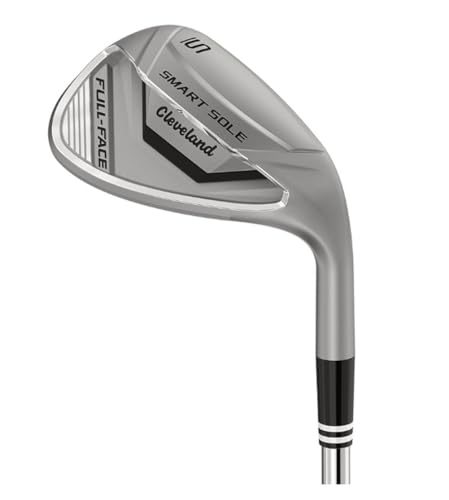
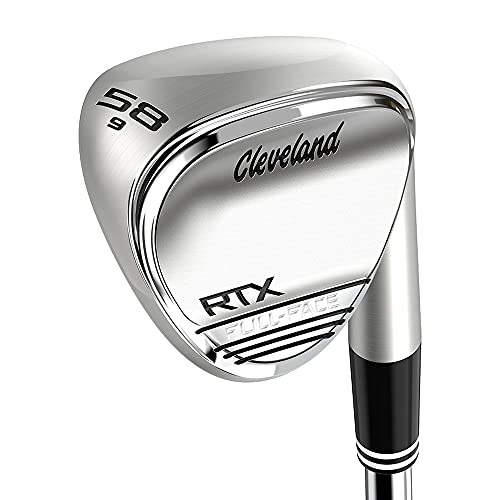
Golf wedges are a crucial part of a golfer's arsenal of tools. They are designed specifically for short approach shots, chips around the green, pitches, and high lobs over hazards. Owing to their precision at shorter distances, they are often referred to as scoring clubs, as they play a significant role in a player's final score.
The Importance of Golf Wedges
Golf wedges are essential for shots that require precision, control, and a higher trajectory, such as approach shots to the green. They are designed with higher loft angles compared to other clubs, which allows players to tailor their shots for varying distances and conditions on the golf course (GolfBalls.com).
The loft angle of a wedge significantly impacts the shot trajectory. Higher lofted wedges generate a higher ball flight and shorter distance, while lower lofted wedges produce a flatter trajectory and longer distance. Furthermore, wedges are crucial for controlling spin and achieving precise landings on the greens. The higher the loft of a wedge, the more backspin it can generate on the golf ball, allowing for better control over distance and stopping power (GolfDistillery).
Types of Golf Wedges
There are different types of wedges, each designed for specific distances and shot types, effectively covering gaps in a player's yardage. This variety allows golfers to tailor their shots for optimal performance.
Here are four primary types of wedges:
- Pitching Wedges - These are the lowest lofted wedges, typically used for longer shots into greens and for certain chips and pitches.
- Gap Wedges - As the name suggests, these wedges fill the "gap" in loft between a pitching wedge and a sand wedge.
- Sand Wedges - These wedges are designed with a higher loft and bounce, making them perfect for bunker shots and high-lofted shots around the green.
- Lob Wedges - These are the highest lofted wedges, and they're used for the shortest, highest shots and those that need to stop quickly on the green.
Each of these wedge types has a different loft angle, enabling you to select the right wedge for the shot you need to make.
In conclusion, understanding the role and types of golf wedges is key to improving your overall performance on the course. After all, a good golfer knows that success in the game often comes down to the details.
4.9 out of 5 stars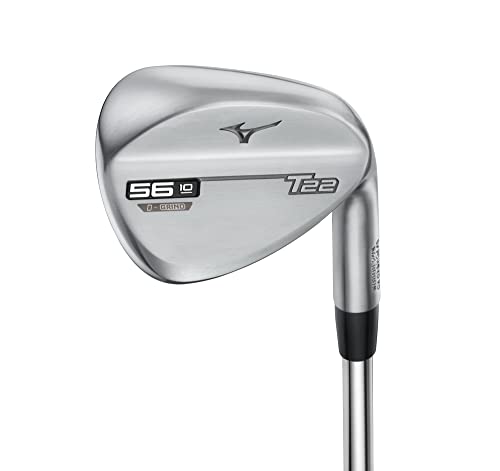
Mizuno T22 Wedge - 58° / 04 Bounce
Enhance your short game with the Mizuno T22 Wedge in 58° / 04 Bounce
Product information
Product Review Score
Product links
Key Aspects of Golf Wedges
Among the arsenal of golf clubs available to a golfer, wedges play a crucial role in crafting short game strategies. Understanding the key aspects of golf wedges such as loft, bounce, and grooves can help players make informed decisions, ultimately enhancing their game.
Understanding Loft in Golf Wedges
The loft of a golf wedge refers to the angle between the clubface and a vertical line. The higher the loft, the higher the trajectory of the ball.
The loft angle of a wedge generally ranges from 46 to 64 degrees. Here's a breakdown of the typical loft ranges for different types of wedges:
| Type of Wedge | Loft Range (degrees) |
|---|---|
| Pitching Wedge | 46-50 |
| Gap Wedge | 50-54 |
| Sand Wedge | 54-58 |
| Lob Wedge | 58-64 |
Higher lofted clubs create more backspin on the ball, facilitating lift and better control over descent, while lower lofted clubs generate less backspin, leading to flatter trajectories and reduced control over the ball's descent.
The Role of Bounce in Wedges
Bounce in golf wedges refers to the angle created between the leading edge and the lowest point of the sole or the trailing edge.
| Type of Bounce | Suitable for |
|---|---|
| Low Bounce (0-10 degrees) | Firm turf conditions, tight lies, or shallow swings |
| Medium Bounce (10-16 degrees) | Variety of conditions and swing types |
| High Bounce (>16 degrees) | Soft conditions, sand, or steep swings |
The bounce of a wedge helps to prevent the club from digging into the ground or sand, providing a smooth glide through the turf, and aiding in ball lift.
Grooves in Golf Wedges
The grooves on a golf wedge serve a critical role in enabling ball control and spin. These small etchings on the clubface interact with the golf ball at impact, creating friction and hence spin. This spin plays a pivotal role in controlling the trajectory and stopping power of the shot, especially around the greens.
Different regulations govern the size, shape, and depth of these grooves, and manufacturers often come up with innovative groove technologies to optimize spin control while staying within the rules.
Understanding these aspects – loft, bounce, and grooves – can greatly assist golfers in selecting the right wedges for their game, contributing to better performance and lower scores.
4.79 out of 5 stars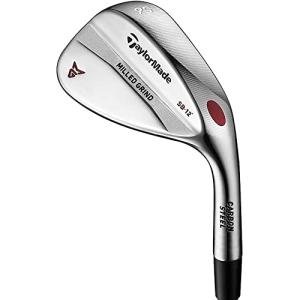
TaylorMade MG1 Chrome Wedge, 60° Loft, Stiff Flex
Enhance your short-game performance with the TaylorMade MG1 Chrome Wedge in 60° Loft, Stiff Flex
Product information
Product Review Score
Product links
Selecting the Right Wedge
Selecting the right golf wedges can significantly impact your performance on the course. With a multitude of options available, it's essential to understand what factors to consider when making your selection and the role of wedge fitting.
Factors to Consider When Buying a Wedge
When purchasing a wedge, several factors should be taken into account:
- Playing style and course conditions: Your wedge should complement your playing style and adapt to the course conditions that you regularly face. For instance, the type of lies you encounter will dictate the bounce options you need. Bounce is the angle between the sole and the lowest point of the wedge, and it plays a critical role in how well a wedge performs from various lies (Golf Monthly).
- Grind options: Different grind options, such as a full sole grind, a heel grind, a toe grind, or a versatile grind, affect how the wedges interact with the turf. The right grind can improve consistency and performance on different shots.
- Sole Design: The sole design of a wedge affects how the club interacts with the turf. Factors such as the grind, bounce, and sole width play a crucial role in determining the versatility and performance of a wedge in different situations (Golf Monthly).
- Adjustability: Wedges with adjustable hosels offer the advantage of tweaking loft and lie angles to fit your swing and improve performance. This adjustability can be particularly useful for golfers looking to fine-tune their wedge setup for specific course conditions or playing styles (Golf Monthly).
- Loft: Consider your playing style, course conditions, and shot preferences when selecting wedges with suitable loft angles to optimize your short game performance. The majority of golfers opt for two or three wedges, with the standard loft gaps being 3°-4° between wedges. This setup allows golfers to cover a range of distances and shots, from full swings to delicate pitches (Golf Monthly).
The Impact of Wedge Fitting
Custom wedge fitting can play a significant role in improving your game. A fitting helps golfers determine the best wedges for their game based on variables like swing style, course conditions, and personal preferences, leading to improved performance on the course (TripSavvy).
Properly fitted wedges that match the golfer's swing mechanics and course demands can significantly enhance precision, consistency, and scoring opportunities in the game of golf. Therefore, it's recommended to invest time in a proper fitting session to ensure you select the best wedges for your game.
In conclusion, understanding the ins and outs of golf wedges and taking the time to select the right one can have a significant impact on your game. Whether you're an amateur golfer or an experienced player, choosing the right golf clubs, including wedges, is an essential step in improving your game.
Maintaining Your Wedges
Just like the rest of your golf gear, golf wedges require regular maintenance to ensure proper playability and performance. This includes knowing when to replace them and spotting signs of wear and tear.
When to Replace Golf Wedges
Typically, golf wedges last around 3 to 4 years before requiring an upgrade. This is largely due to their design and purpose, which allows them to withstand usage better than some other types of golf clubs (Golf Monthly).
Despite this, it's important to note that golf wedges might need replacement more often if they are used frequently. In a test conducted by Titleist with their Vokey wedges, it was suggested that after 75 rounds, there could be a significant decline in performance. The durability of wedges varies based on factors like the material they are made of, the playing conditions, and how frequently a player practices with them.
Signs of Wedge Wear and Tear
The grooves of golf wedges can wear out over time due to regular use and may lose their effectiveness in imparting spin on the ball. Worn-out grooves lead to reduced consistency on different lies, affecting the player's ability to spin the ball. When grooves are worn out, there is less control over the ball around the greens, making it harder to score with wedges.
Observations have shown that using new wedges with fresh grooves can result in better control of spin around the greens. This improved performance is not only noticeable in short shots but also in full swings.
In conclusion, maintaining your golf wedges is an essential part of enhancing your game. By knowing when to replace them and recognizing the signs of wear and tear, you can ensure that your wedges are always in top condition, ready to help you unlock the art of scoring.
Enhancing Your Game with Wedges
In golf, the scoring game (shots taken from around 100 yards into the green) contributes significantly to the overall score. Here, golf wedges play an integral role in performance enhancement and scoring. Understanding how to maximize the use of wedges and their role in scoring can help golfers improve their game significantly.
$149.99
$104.99
4.09 out of 5 stars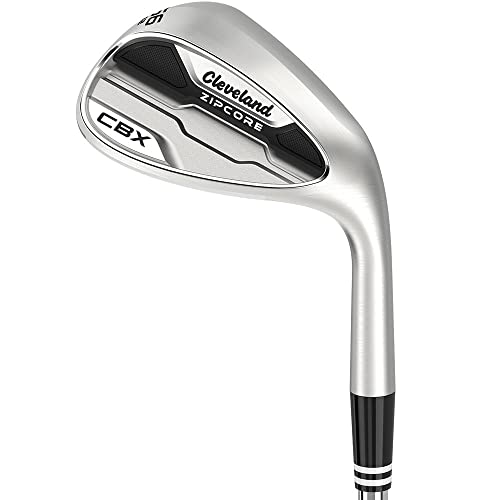
Cleveland CBX Zipcore TS56 Wedge RH Golf Club
Upgrade your short game with the Cleveland CBX Zipcore TS56 Wedge RH Golf Club
Product information
Product Review Score
Product links
Maximizing Performance with Wedges
Upgrading your wedges can provide benefits such as improved spin, ball control, and consistency in your short game, which are crucial aspects of scoring well in golf.
It's vital for golfers to understand the different wedge lofts and their uses. The loft angle of a wedge generally ranges from 46 to 64 degrees, with each type of wedge—pitching, gap, sand, and lob—having distinct lofts for different distances and situations on the course (GolfDistillery).
The higher the loft of a wedge, the more backspin it can generate on the golf ball. This is crucial for controlling the distance and stopping power of the shot, especially around the greens (GolfDistillery).
Most golfers opt for two or three wedges, with the standard loft gaps being 3°-4° between wedges. This setup allows golfers to cover a range of distances and shots, from full swings to delicate pitches.
The Role of Wedges in Scoring
In every golfer's bag, wedges are vital tools. Properly selecting and using wedges can lead to more up-and-downs, which means saving strokes and improving overall scoring in golf (Curated).
Moreover, properly fitted wedges that match the golfer's swing mechanics and course demands can significantly enhance precision, consistency, and scoring opportunities in the game of golf.
To optimize short game performance, golfers should consider their playing style, course conditions, and shot preferences when selecting wedges with suitable loft angles.
In conclusion, to enhance your game and score, consider investing time in understanding the different types of golf wedges, their lofts, and how to utilize them effectively in various game scenarios. For more information on golf gear, check out our articles on golf clubs, golf shoes, and golf bags.